Speaking English confidently is not simply about knowing thousands of words or memorising grammar rules. Real spoken English mastery comes from being able to understand, think, respond and communicate naturally.
This article answers some of the most common questions learners ask about improving their English-speaking skills.
Q1. What is Spoken English Mastery?
Spoken English mastery means being able to use English confidently and naturally in real-life situations.
It includes:
Speaking clearly
Understanding everyday English
Using appropriate vocabulary
Forming sentences quickly
Using grammar naturally
Asking and answering questions
Expressing opinions
Participating in conversations
Speaking without excessive hesitation
The objective is not to speak complicated English. The objective is to communicate your ideas effectively.
Q2. Why do many people understand English but struggle to speak it?
This is one of the most common English-learning problems.
Many learners spend years studying English through textbooks but get very little opportunity to actually use the language.
They may know the grammar of a sentence but hesitate when they have to produce it spontaneously.
Speaking is a skill. Like any other skill, it improves through regular practice.
Q3. How can I improve my spoken English?
A practical approach is to combine four activities:
Listen → Understand → Practise → Speak
Listen to natural English every day. Notice how people form sentences. Practise useful expressions rather than isolated words. Then use those expressions in your own conversations.
For example, instead of learning only the word "agree", learn useful expressions such as
I completely agree.
I agree with you.
I am not sure I agree.
That's a good point.
This makes vocabulary more usable in real conversations.
Q4. Do I need advanced grammar to speak English fluently?
No.
You need functional grammar before advanced grammar.
A learner should first become comfortable with structures such as the following:
I am...
I have...
I can...
I want to...
I need to...
I used to...
I would like to...
I have been...
I think...
I believe...
Once these structures become automatic, more sophisticated English becomes easier.
Q5. How can I stop translating from my mother tongue into English?
Do not try to translate every sentence word-for-word.
Instead, develop a bank of ready-to-use English expressions.
For example, rather than translating a thought from your first language, learn expressions such as
Let me think about it.
What I mean is...
As far as I know...
In my opinion...
It depends on the situation.
I have never thought about it that way.
With repeated use, English begins to become more automatic.
Q6. How can I improve my English vocabulary for speaking?
Focus on usable vocabulary, not merely difficult vocabulary.
A learner who knows 500 highly useful expressions can often communicate more effectively than someone who knows thousands of difficult words but cannot use them naturally.
Learn vocabulary in context.
Instead of learning:
decision
learn:
Make a decision
Take a difficult decision
a major decision
reconsider a decision
This approach also helps with English collocations.
Q7. How important is pronunciation in spoken English?
Pronunciation is important because clear pronunciation makes communication easier.
You do not need to eliminate your accent completely. Instead, concentrate on:
Clear sounds
Word stress
Sentence stress
Intonation
Linking
Speaking at an appropriate speed
The goal is intelligibility, not imitation of a particular accent.
Q8. How can I become more confident while speaking English?
Confidence develops through successful communication.
Start with situations where you can speak comfortably. Gradually increase the difficulty.
For example:
Stage 1: Speak about yourself.
Stage 2: Describe your daily routine.
Stage 3: Give your opinion.
Stage 4: Explain a problem.
Stage 5: Participate in a discussion.
This gradual progression makes English-speaking practice less intimidating.
Q9. How much should I practise spoken English every day?
Consistency matters more than occasional long sessions.
Even 20–30 minutes of focused daily practice can be valuable if the learner actively speaks.
A simple routine could be:
10 minutes: listening
10 minutes: vocabulary and expressions
10 minutes: speaking practice
The important point is to actually produce English rather than only consume English content.
Q10. What is the best way to learn spoken English?
The best approach combines grammar, vocabulary, listening, pronunciation and conversation practice.
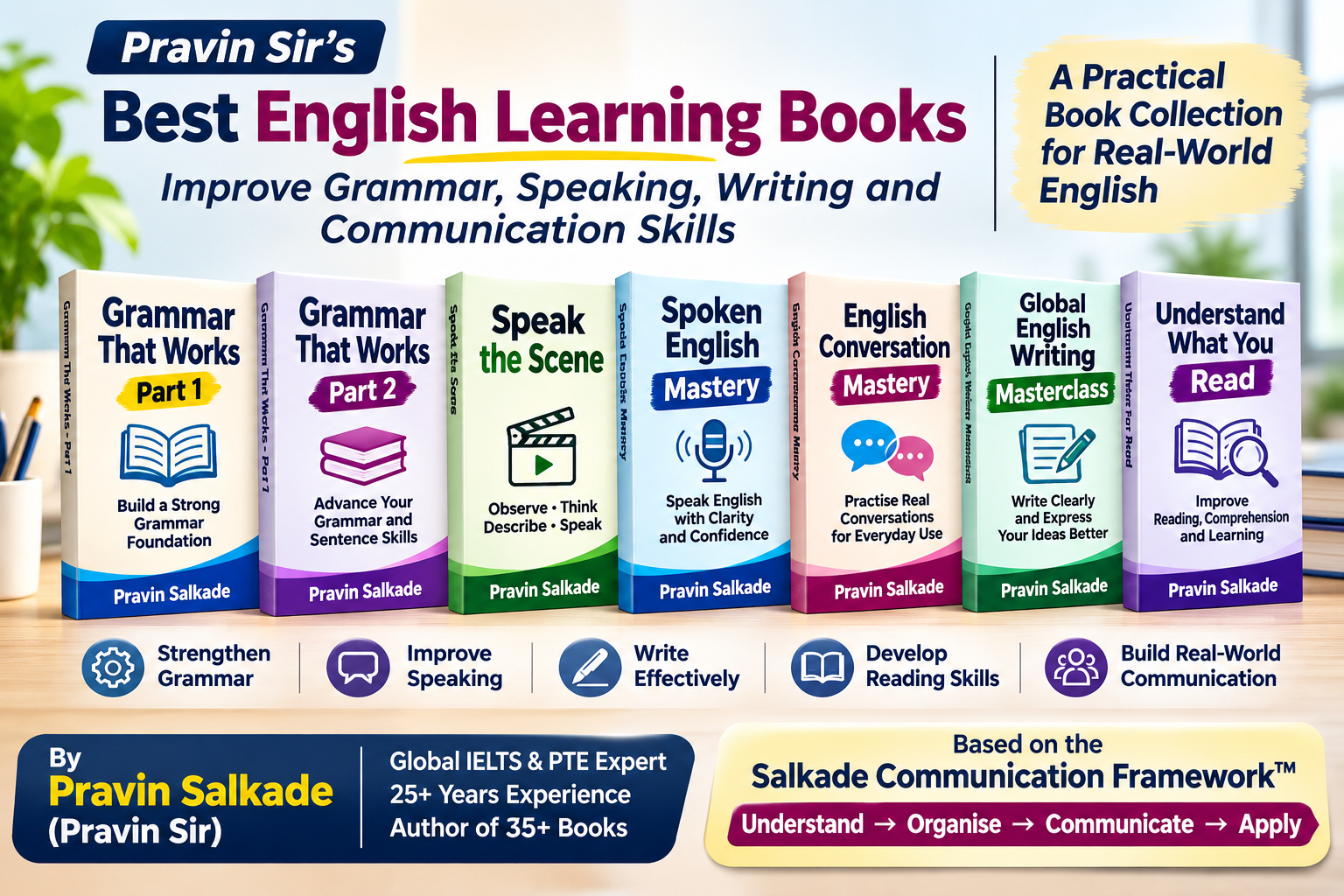
My book Spoken English Mastery focuses on practical English communication rather than treating English as merely a collection of grammar rules.
The aim is simple: understand English, use English and communicate with confidence.
Whether you are a student, professional, teacher or adult learner, improving spoken English can strengthen your communication in education, work and everyday life.
Final Thought
You do not become a confident English speaker by waiting until your English is perfect.
You become confident by using English regularly, learning from mistakes and gradually making better sentences.
That is the foundation of spoken English mastery.