Knowing English vocabulary is not the same as being able to hold a conversation.
Many learners know hundreds of words but hesitate when someone asks them a simple question.
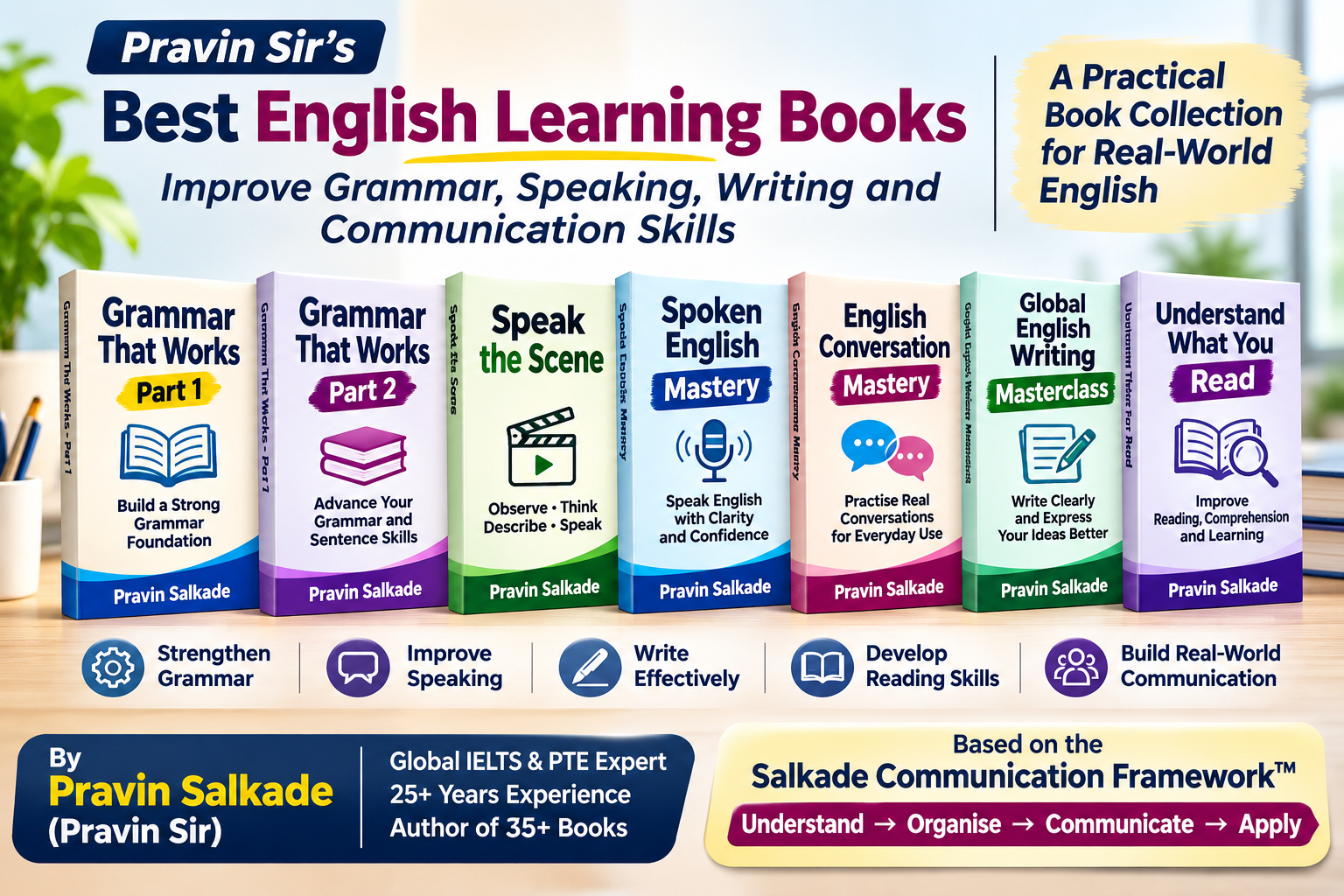
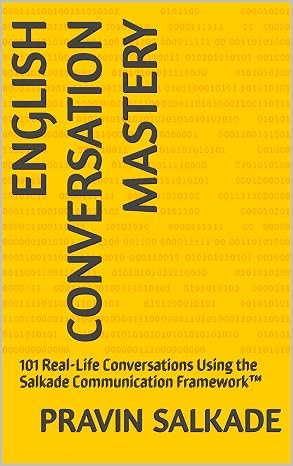
English Conversation Mastery focuses on the practical side of communication: what to say, how to say it and how to keep a conversation going.
Q1. Why do I understand English but struggle to speak it?
Understanding is largely a receptive skill. Speaking requires you to produce language quickly.
You have to select words, organise a sentence, pronounce it and respond to another person—all in real time.
Regular conversation practice helps bridge this gap.
Q2. How can I start speaking English without feeling nervous?
Start with familiar situations.
Talk about your family, work, hobbies, daily routine, shopping, travel or plans.
Do not wait until your English becomes perfect.
Confidence is developed through speaking, not before speaking.
Q3. What should I say when I don't understand someone?
You do not need to remain silent.
Useful expressions include:
- Could you say that again?
- Sorry, I didn't catch that.
- Could you speak a little more slowly?
- What do you mean by that?
- Do you mean...?
These expressions allow you to control a conversation instead of abandoning it.
Q4. How can I avoid one-word answers in English conversations?
Learn to add a reason, example or follow-up thought.
Instead of:
Yes, I like travelling.
say:
Yes, I enjoy travelling, especially to places where I can experience something different from my everyday life.
You don't need difficult vocabulary. You need something meaningful to say.
Q5. How can I keep a conversation going?
Use follow-up questions.
If someone says, 'I recently visited Goa,' you could ask:
What did you enjoy most about the trip?
How long did you stay there?
Would you go there again?
Conversation becomes easier when you stop thinking only about your next sentence and start responding to what the other person has said.
Q6. Should I memorise English conversation scripts?
Scripts can be useful for learning useful expressions, but memorising complete answers can make your speech sound unnatural.
Learn conversation patterns, not rigid speeches.
This gives you flexibility to respond to different situations.
Q7. How can I improve my English pronunciation while speaking?
Focus first on being understandable.
Work on difficult sounds, word stress, sentence stress and natural rhythm.
Record yourself speaking for one minute and listen carefully. Identify one pronunciation problem at a time rather than trying to correct everything simultaneously.
Q8. What English should I learn for real-life conversations?
Start with practical communication:
- Greetings
- Introductions
- Asking for information
- Giving opinions
- Making requests
- Agreeing and disagreeing
- Making suggestions
- Clarifying information
- Small talk
- Telephone conversations
- Workplace communication
These situations provide immediately useful language.
Q9. How long does it take to become confident in English conversation?
There is no universal timetable.
Progress depends on your starting level, frequency of practice and quality of feedback.
Even 15–20 minutes of focused speaking practice every day can be more useful than studying English for several hours once a week.
Q10. What is the real secret to mastering English conversation?
Stop waiting for perfect English.
Speak. Make mistakes. Notice them. Improve them. Speak again.
Conversation mastery comes from turning knowledge into automatic communication.