Artificial Intelligence can answer questions in seconds.
But there is a more important question:
Can we determine whether the answer deserves to be believed?
A recent discussion involving IISc Bengaluru professor Prathosh AP and IIT students explored how traditional Indian texts, or shastras, can relate to reasoning and artificial intelligence.
The idea raises a much bigger issue for education.
In an age when AI can generate explanations, arguments, essays, recommendations and even decisions, critical thinking is becoming more—not less—important.
This is also why critical thinking connects naturally with several books in the Salkade Communication Framework™ ecosystem.
What is critical thinking?
Critical thinking is the ability to examine information before accepting it.
A critical thinker asks:
- What exactly is being claimed?
- What evidence supports the claim?
- What assumptions are being made?
- Is there another explanation?
- What information is missing?
- What could make this conclusion wrong?
- What are the possible consequences?
Critical thinking is therefore not simply about being sceptical.
It is about thinking carefully before reaching a conclusion.
Why is critical thinking becoming more important because of AI?
AI has dramatically reduced the time required to obtain information.
But faster information does not automatically mean better decisions.
An AI system can produce an answer that sounds highly convincing while still containing an error, an unsupported assumption or an incomplete interpretation.
Therefore, the human role is changing.
We increasingly need to move from:
Finding answers → Evaluating answers
and from:
Collecting information → Interpreting information
and from:
Following conclusions → Testing conclusions
This is one of the most important educational challenges of the AI era.
Can traditional Indian texts contribute to critical thinking?
They can provide valuable material for examining questions about reasoning, ethics, responsibility, human behaviour and decision-making.
But the goal should not be simply to replace one form of unquestioned authority with another.
The better approach is to read, question, compare and interpret.
A student can ask:
What does this text say?
Then:
Why does it say this?
Then:
What assumptions are behind the argument?
And finally:
Does the reasoning remain relevant in today's context?
This transforms reading from passive information consumption into intellectual inquiry.
The real educational value may therefore lie not only in the answers contained in a text, but in the quality of questions that the text encourages us to ask.
Why is questioning more important than memorising answers?
Because memorised answers work only when the situation remains familiar.
Real life rarely does.
Students, professionals, entrepreneurs and investors constantly encounter situations where there is no ready-made answer.
A person who has learned to question can adapt.
A person who has only memorised answers may struggle when circumstances change.
This is particularly important in the AI era.
If AI can provide the answer, the human advantage increasingly lies in asking the right question and evaluating the response.
What is the danger of jumping to conclusions?
One of the most common failures in human reasoning is reaching a conclusion before examining enough evidence.
We see one event.
We create an explanation.
We believe the explanation.
Then we search for evidence that supports what we already believe.
This is one reason critical thinking requires deliberate pauses.
Before concluding, ask:
What else could explain this?
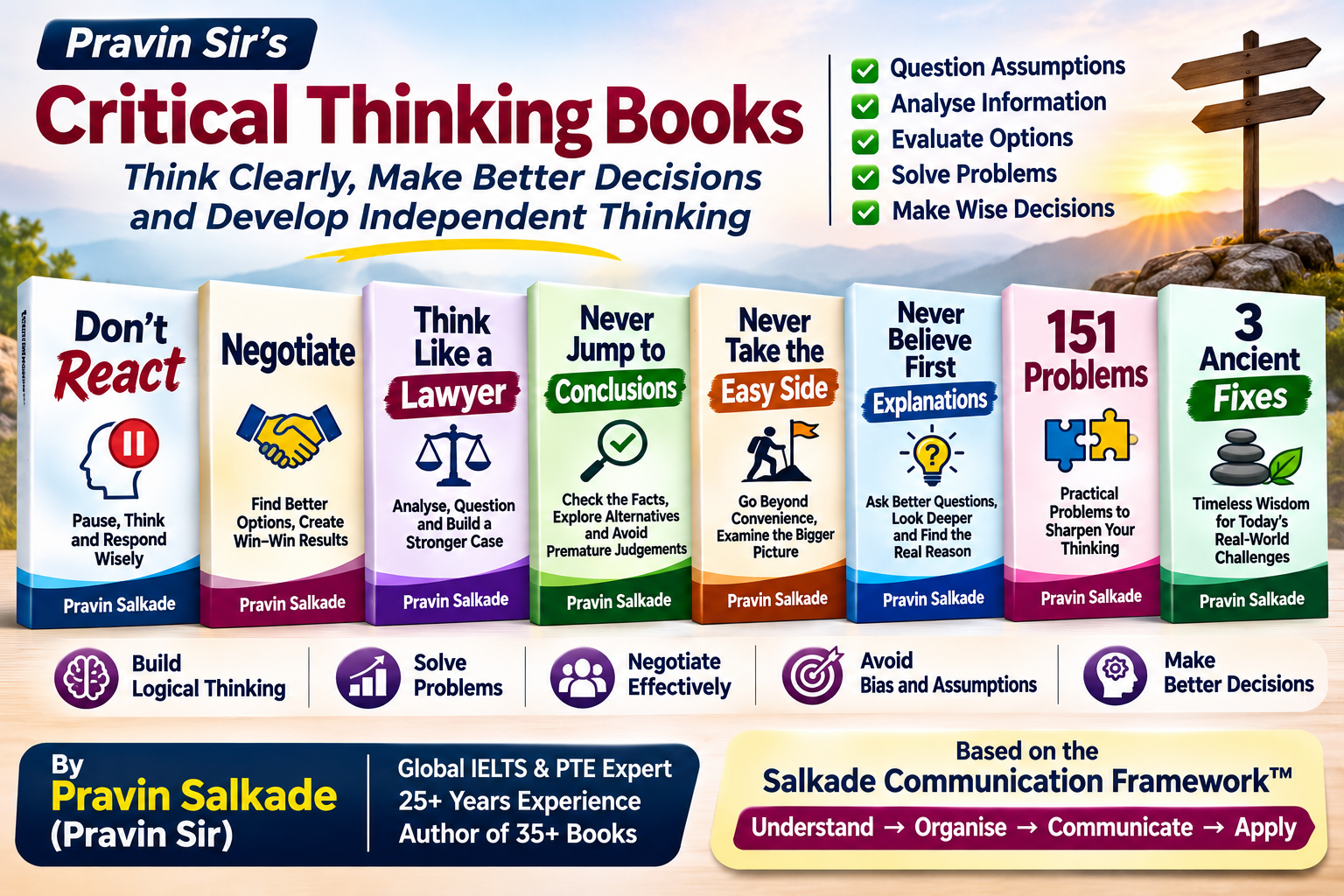
This principle is explored in greater depth in Never Jump to Conclusions, which focuses on the importance of slowing down the reasoning process before making judgments.
Suggested internal link: Never Jump to Conclusions
Why shouldn't we automatically believe the first explanation?
The first explanation is psychologically attractive because it gives us closure.
But the first explanation is not necessarily the correct explanation.
Consider a simple example.
A student performs poorly in an examination.
Possible explanation:
The student is not intelligent.
But what else could be happening?
Perhaps:
- The student misunderstood the question.
- The preparation method was ineffective.
- Anxiety affected performance.
- The student lacked adequate practice.
- The teaching method did not match the student's learning style.
- The student knew the material but could not express it effectively.
The event is the same.
The explanation changes.
This is the central idea behind Never Believe the First Explanation—a reminder to examine alternative explanations before accepting the most obvious one.
Suggested internal link: Never Believe the First Explanation
Can intelligent people still make bad decisions?
Absolutely.
Intelligence and good decision-making are not identical.
A highly intelligent person can still:
- make decisions emotionally,
- overlook important evidence,
- follow the crowd,
- become overconfident,
- defend an existing belief,
- or choose an attractive but flawed explanation.
This is the idea explored in SMART MINDS, BAD CHOICES.
The important question is therefore not:
How intelligent are you?
It is:
How reliably do you think when the decision matters?
Suggested internal link: SMART MINDS, BAD CHOICES
How does critical thinking improve decision-making?
A useful decision-making process can be simplified into five questions:
1. What do I know?
Separate facts from assumptions.
2. What don't I know?
Identify missing information.
3. What are the alternatives?
Avoid treating the first available option as the only option.
4. What could go wrong?
Think about downside and unintended consequences.
5. What evidence would change my mind?
This final question is particularly powerful.
It forces us to remain open to correction.
How does critical thinking apply to investing?
Investing is one of the clearest examples of why critical thinking matters.
An investor may hear:
This coin will go up.
A critical thinker asks:
- Why?
- Based on what evidence?
- Who is making the claim?
- What assumptions are involved?
- What is already priced in?
- What could invalidate the thesis?
- What is the downside?
- What is the opportunity cost?
The same principle applies to stocks, businesses, real estate and personal financial decisions.
The quality of an investment decision depends not only on information, but on how that information is interpreted.
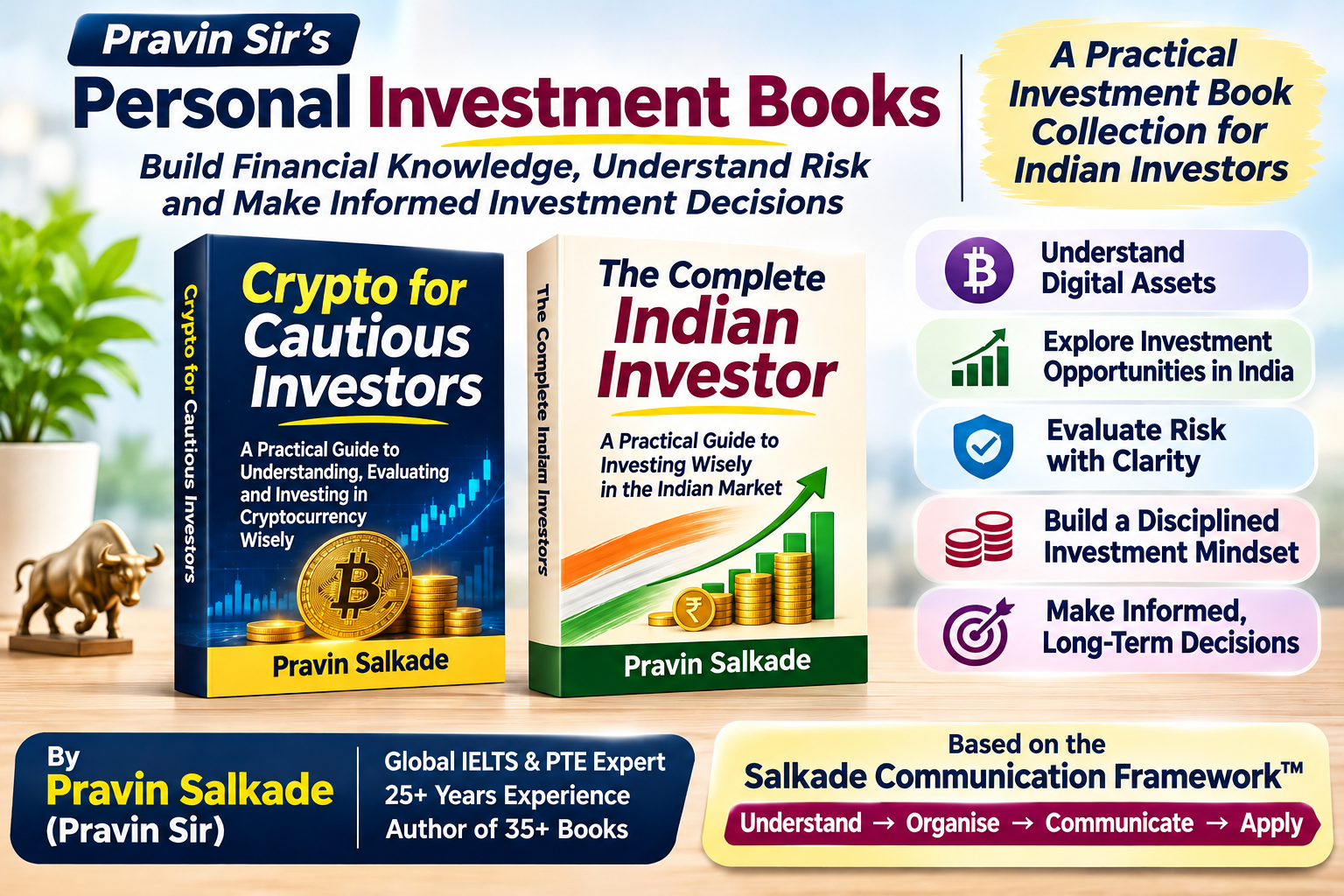
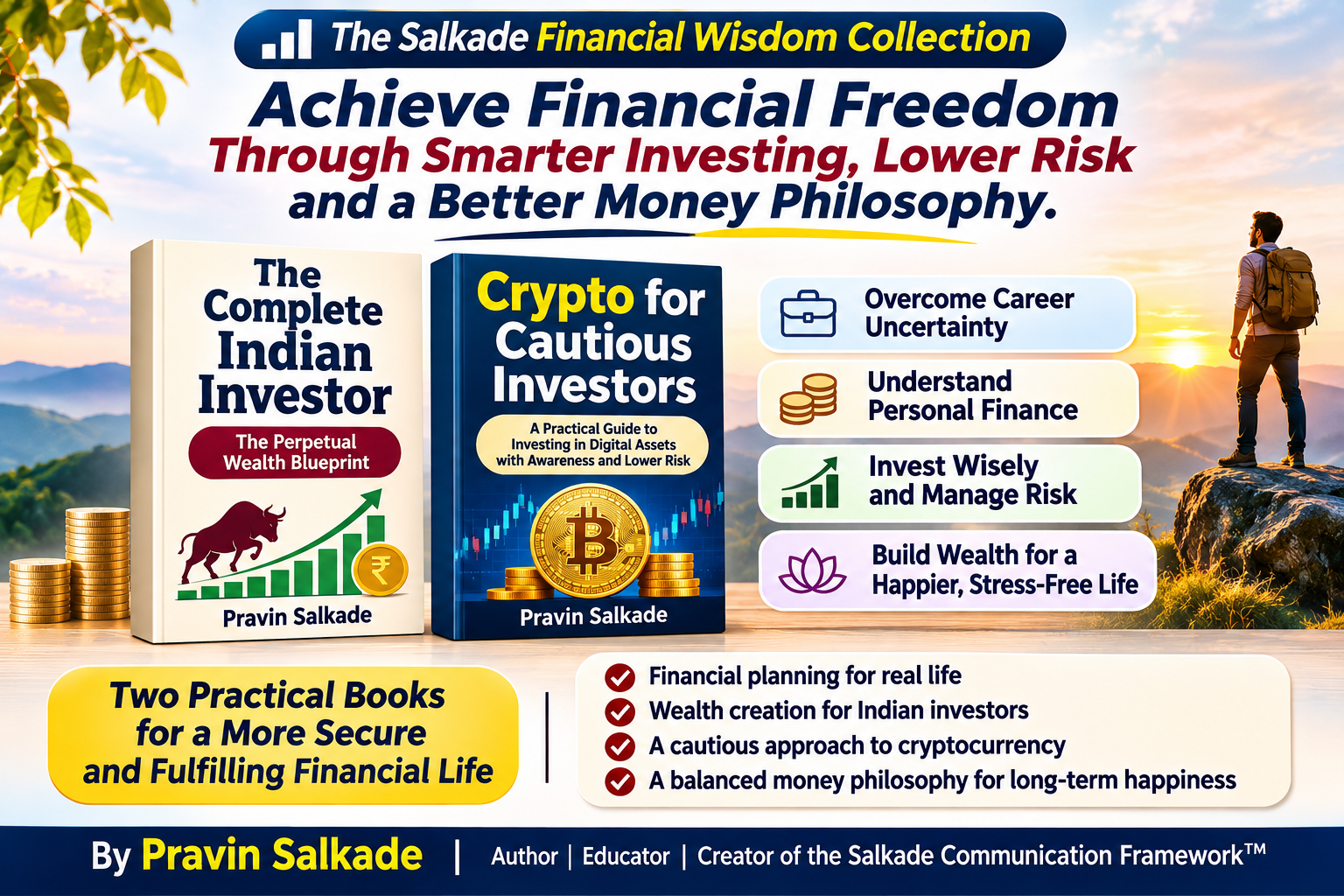
These ideas connect naturally with The Complete Indian Investor: The Perpetual Wealth Blueprint, which approaches investing through a broader framework of financial thinking and long-term decision-making.
Suggested internal link: The Complete Indian Investor
What does critical thinking have to do with the Bhagavad Gita, Confucius and Stoicism?
Different philosophical traditions have explored questions about human behaviour, choices, responsibility, desire, judgement and self-control.
Studying different traditions can therefore provide an opportunity to compare ideas rather than automatically accepting one viewpoint.
This is the thinking behind 151 PROBLEMS, 3 ANCIENT FIXES: Gita, Confucius & Stoicism.
The objective is not merely to study three ancient traditions.
It is to examine how ideas from different traditions can help us approach modern problems with greater reflection.
Suggested internal link: 151 PROBLEMS, 3 ANCIENT FIXES
What should students learn in the AI era?
Students certainly need technical skills.
But technical knowledge alone will not be enough.
The future-ready student should also develop:
Questioning
The ability to ask better questions.
Verification
The ability to check information before accepting it.
Reasoning
The ability to connect evidence with conclusions.
Perspective
The ability to consider more than one viewpoint.
Decision-making
The ability to choose despite uncertainty.
Self-correction
The ability to change one's mind when better evidence appears.
These are transferable skills.
They matter in education, careers, entrepreneurship, relationships, investing and everyday life.
Is AI a threat to critical thinking?
It can be—if we use it as a substitute for thinking.
Imagine a student who asks AI every question and accepts every answer without verification.
The student may become better at obtaining information while becoming weaker at independent reasoning.
But imagine a different student.
The student asks AI:
Give me three possible explanations.
Then:
What assumptions are you making?
Then:
Give me evidence against your conclusion.
Then:
What would change your answer?
That student is using AI differently.
AI becomes a thinking partner rather than a thinking replacement.
What is the biggest lesson for educators?
Education should not only teach students what to think about.
It should also teach them how to think about what they encounter.
The ability to analyse a claim, identify an assumption, compare alternatives and evaluate evidence may become one of the most valuable forms of education in the AI era.
The classroom of the future may therefore need fewer exercises that simply reward memorisation and more exercises that reward:
Questioning.
Reasoning.
Evidence.
Debate.
Reflection.
Decision-making.
How can parents help children develop critical thinking?
Parents can begin with ordinary conversations.
Instead of immediately giving an answer, ask:
What do you think?
Then:
Why do you think that?
Then:
What evidence supports your view?
Then:
Could there be another explanation?
And finally:
What would make you change your mind?
These simple questions can gradually develop a habit of independent reasoning.
What are the five questions every critical thinker should ask?
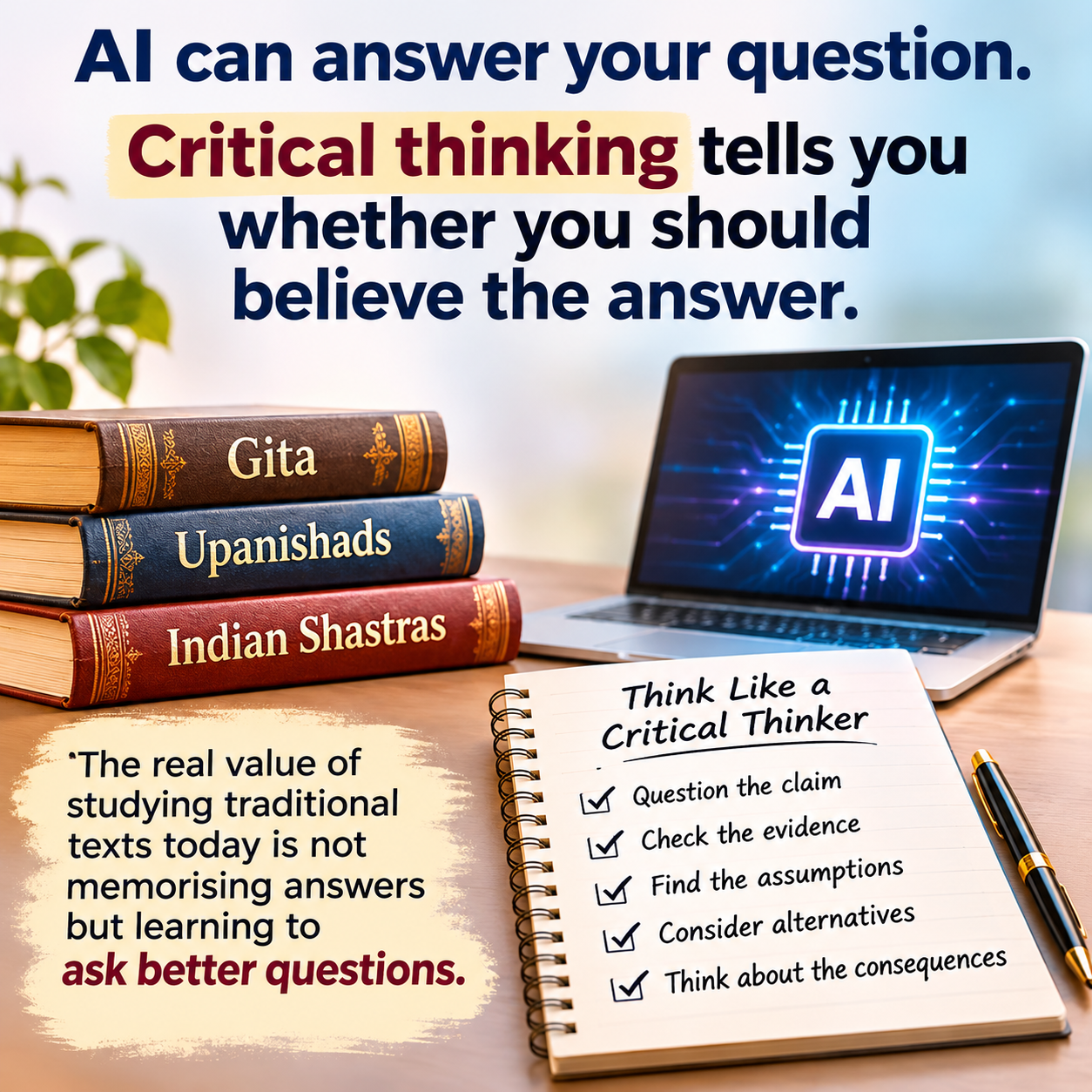
Before accepting an important claim, ask:
1. What is the claim?
Define exactly what is being said.
2. What is the evidence?
Separate evidence from opinion.
3. What assumptions are being made?
Look beneath the argument.
4. What are the alternatives?
Don't assume the first explanation is the only one.
5. What could prove me wrong?
Remain intellectually flexible.
These five questions are useful whether you are reading a news article, listening to a teacher, using AI, making an investment or making an important life decision.
The real skill of the AI ageAI can dramatically increase our access to information.
But information is not wisdom.
An answer is not automatically truth.
Confidence is not evidence.
And intelligence does not guarantee good judgement.
The most valuable skill may therefore be something much older than artificial intelligence:
the ability to think before believing.
Traditional texts can give us perspectives.
AI can give us possibilities.
Education can give us knowledge.
But critical thinking helps us decide what to accept, what to question and what to investigate further.
That is why the future does not belong simply to people who know how to use AI.
It belongs to people who know how to think while using AI.
Explore the books on critical thinking and decision-making
This philosophy connects several books in the Salkade Communication Framework™ ecosystem:
Never Jump to Conclusions
Learn why premature conclusions can distort judgement and how to examine alternative explanations.
Never Believe the First Explanation
Develop the habit of questioning the first explanation and looking for deeper causes.
SMART MINDS, BAD CHOICES
Explore why intelligence alone does not guarantee good decisions.
151 PROBLEMS, 3 ANCIENT FIXES: Gita, Confucius & Stoicism
Explore modern problems through ideas drawn from three major philosophical traditions.
The Complete Indian Investor: The Perpetual Wealth Blueprint
Apply critical thinking and disciplined decision-making to personal investing and wealth creation.
Together, these books form a broader journey:
Question → Examine → Compare → Think → Decide
And that journey may be more important than ever in the age of AI.
Final Thought
AI can answer your question.
Critical thinking tells you whether you should believe the answer.
The future belongs not to those who stop thinking because AI is available, but to those who learn to think better because AI is available.